
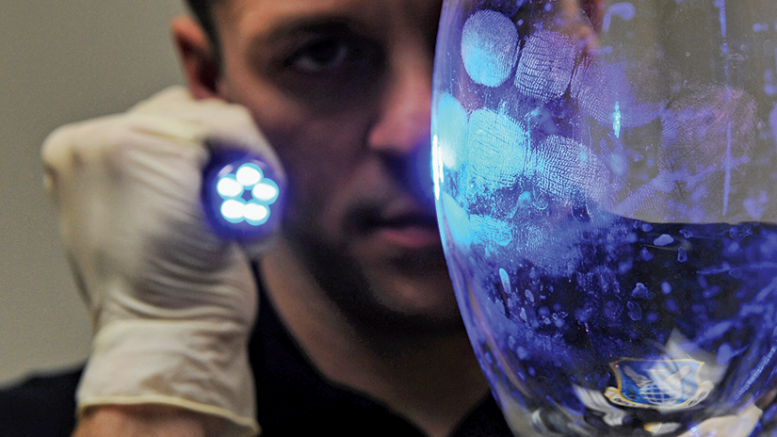
In a coverage in 2019, Police and Security News highlights a shift in forensic latent fingerprint collection away from traditional powder-based methods toward non-contact optical imaging technologies. The article features the ForenScope Contactless Fingerprint System as an example of how modern tools are changing the way latent prints are visualized and preserved.
Traditional fingerprint development techniques often require direct contact with surfaces using powders, dyes, or chemicals, an approach that carries risks of DNA contamination or damage to fragile evidence. The ForenScope Contactless Fingerprint System eliminates these risks by providing 100 % contact-free imaging, enabling examiners to locate, visualize, and capture latent fingerprints and handprints without touching the surface or applying any consumable reagents.
The system’s integrated axial lighting array and high-performance imaging hardware operate independently of daylight, using multiple visible wavelengths to reveal latent detail on glossy and non-porous surfaces. This makes it suitable for crime scene use as well as laboratory documentation, allowing evidence to be assessed and imaged on-site without needing to transport items to a controlled environment.
According to the article, contactless latent fingerprint imaging not only preserves trace evidence but also supports concurrent analysis for DNA, digital, or other forensic examinations—all without the potential contamination or destruction inherent in traditional development methods.
ForenScope continues to innovate in optical forensic imaging, advancing tools that help investigators maximize evidence yield while maintaining the integrity of both physical and biological traces.