Prof. Dr. Hakan Kar, MD – Professor of Forensic Medicine, Sexual Assault Examiner, Mersin University Medical Faculty
Bite marks, kiss marks, bruises, and suction ecchymoses are among the important findings that should be considered and documented during sexual assault examinations. Although these lesions are most commonly found in the genital area following a sexual assault, they can also appear on non-genital regions of the body. In cases of suspected sexual assault, correctly identifying and interpreting non-genital injuries can be critical to the case and provide considerable evidence supporting the victim’s account.
It is recognized that some victims of sexual assault may not exhibit any traumatic lesions or may sustain only minor injuries. However, even minor lesions can be highly relevant on a case by case basis and must be meticulously documented. While certain injuries may be intended to physically incapacitate the victim, others, such as bite marks or suction ecchymoses, may be sexually motivated. Although rare, they may also occur as part of a sadomasochistic practice.
In sexual assaults, bite marks and suction ecchymoses are more frequently seen on the arms of male victims compared to females, and more frequently on the breasts of female victims compared to males. These acts can cause various lesions across different parts of the body, including ecchymoses, hematomas, and contusions. Non-genital injuries must be evaluated in detail and correctly identified, taking into account the anamnesis provided by the individual. Although they may not cause a severe degree of physical harm, the consistency of these lesions with the individual’s statements can contribute significantly to the judicial process. Lesions resulting from biting and suction are most commonly found on the breasts and nipples, but they can also appear on the neck, shoulders, thighs, abdomen, pubis, and vulva.
In the literature, lesions caused by suction are colloquially referred to as “love bites.” These lesions may develop during both sexual assaults and intense consensual sexual intercourse. If the victim’s anamnesis includes biting or suction, or if a compatible lesion is discovered during the examination, collecting a sample to analyze the perpetrator’s DNA may be critical in resolving the case.
In such instances, naked-eye evaluation of these injuries may be insufficient due to ambient lighting conditions and the fact that healing lesions in delayed presentations can be difficult to fully identify. Under these circumstances, utilizing SAFE (Sexual Assault Forensic Examination) Imaging Systems which employ multi-wavelength light reflections rather than relying on ambient light is critical. These systems are capable of imaging down to the dermis layer beneath the skin, substantially aiding in lesion detection. Furthermore, employing SAFE Imaging Systems is vital not only for providing diverse light reflections to detect wounds but also for identifying the perpetrator’s body fluids on the victim. Detecting and recording body fluids that are invisible to the naked eye using SAFE Imaging Systems, and subsequently collecting these samples for DNA analysis, remains critical in many cases.
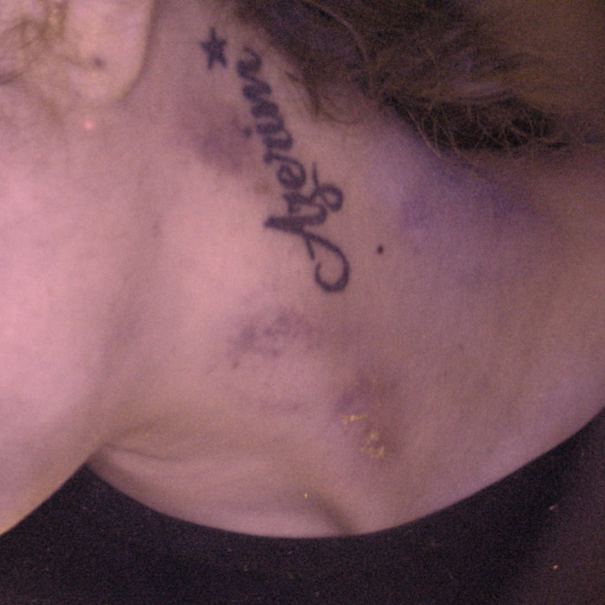
Figure 1: Bite marks and suction ecchymosis with flourescence on the left upper side of neck, captured under D1 filter of SAFE (Sexual Assault Forensic Examination) Imaging Systems
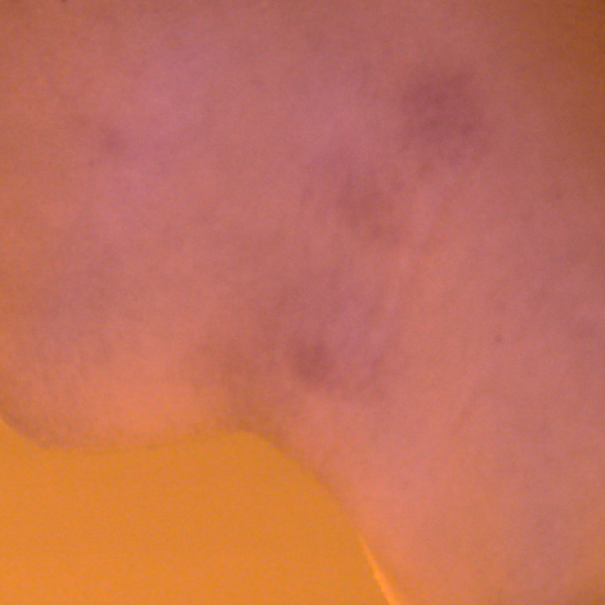
Figure 2: Bite marks under the left side of chin, captured under D2 filter of SAFE (Sexual Assault Forensic Examination) Imaging Systems
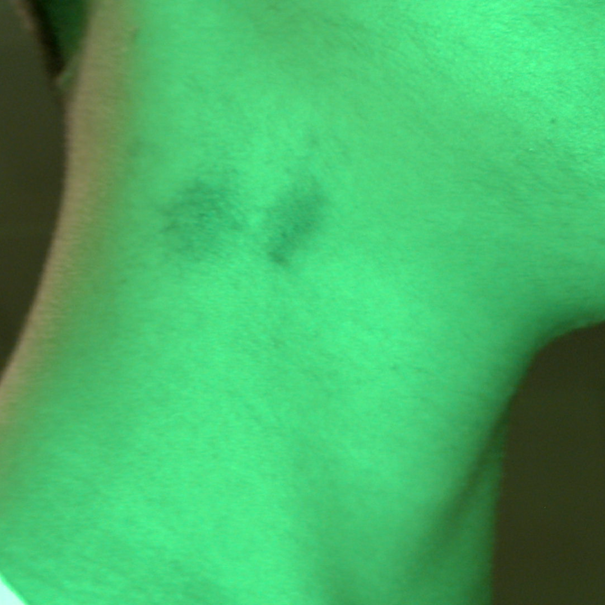
Figure 3: Suction ecchymosis on the right upper side of neck, captured under green light filter of SAFE (Sexual Assault Forensic Examination) Imaging Systems
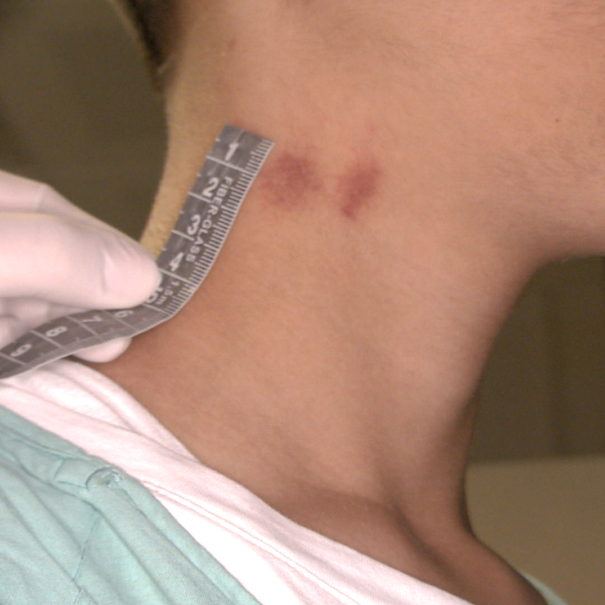
Figure 4: Suction ecchymosis on the right side of neck, captured under white polarized light of SAFE (Sexual Assault Forensic Examination) Imaging Systems
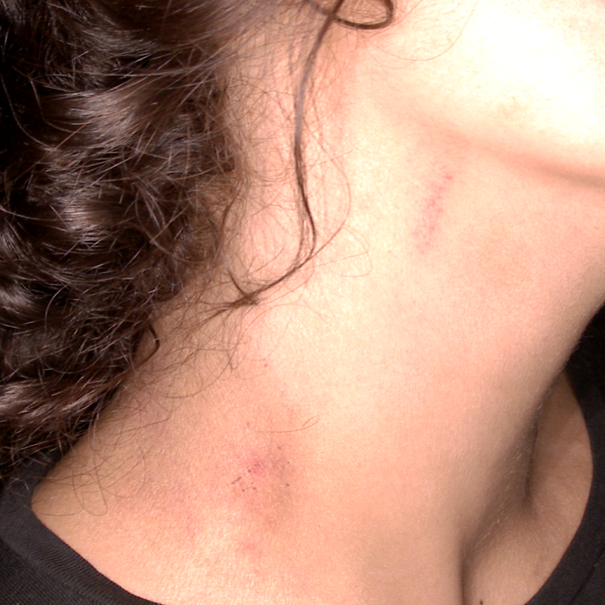
Figure 5: Suction ecchymosis and abrasions on the right side of neck, captured under white light of SAFE (Sexual Assault Forensic Examination) Imaging Systems