
AI ForenScope Technology
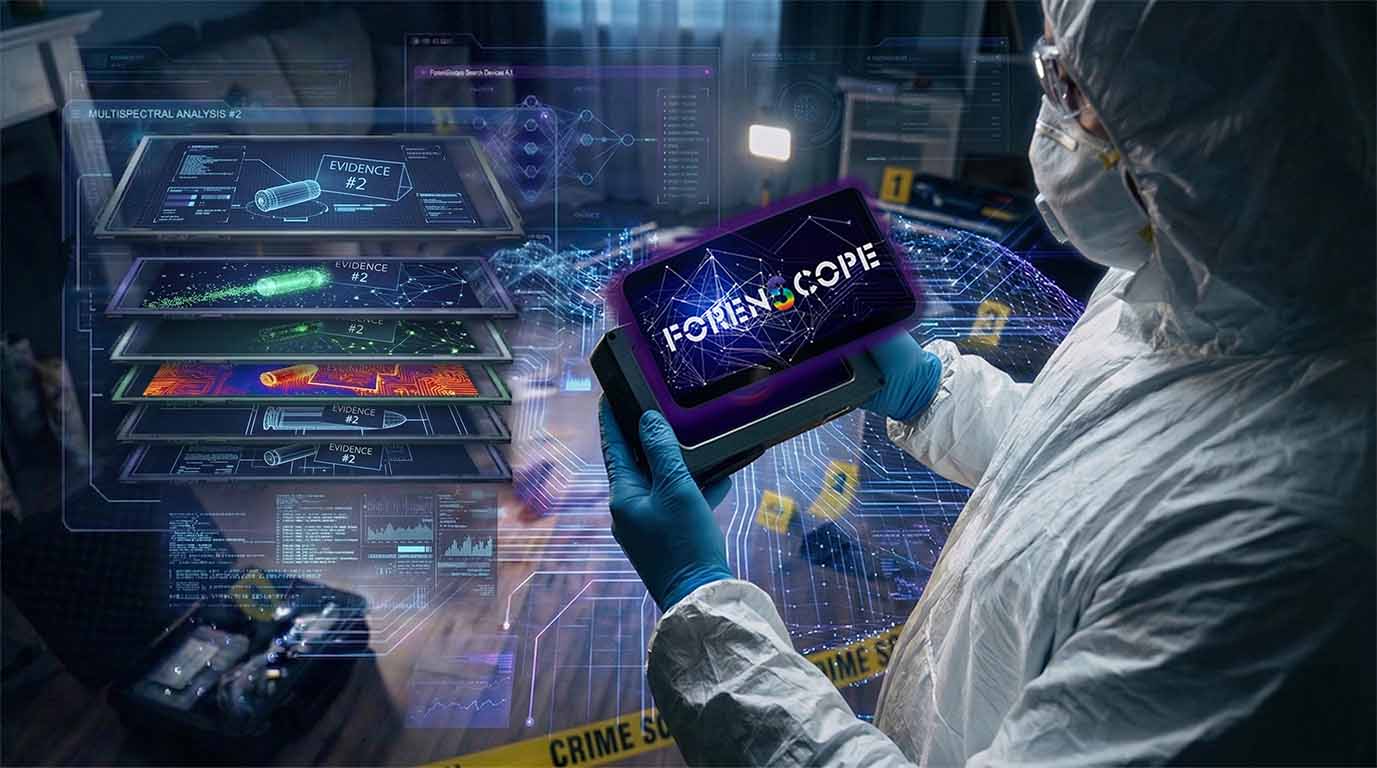
ForenScope continuously advances the high-technology standards within its hardware and software ecosystem through integrated artificial intelligence solutions. In our end-to-end systems, which extend from the image acquisition stage to advanced processing and analysis, AI-based tools are positioned not merely as supportive components, but as technology layers that ensure performance, accuracy, and operational efficiency.
AI-supported modules currently active in our systems, such as Image Enhancement, Auto Smart Search, and Smart Buttons, reduce the operational burden on users in the field and laboratory environments while increasing analysis speed and workflow efficiency in forensic image processing. These structures, evaluated alongside an advanced user experience approach, bring together both technical capability and ease of use within the same architectural framework.
At the core of our technology infrastructure lies a multi-layered development ecosystem based on Java, C, C++, and Assembly, and primarily Kotlin—an expressive, secure, modern, and flexible language at the center of our software architecture for our Android-based devices. Kotlin’s strong compatibility with modern Android architectures supports the efficient, organized, and sustainable management of processes evolving across different layers such as user interface, business logic, and device interaction. In our closed-box embedded system architecture; imaging, data processing, user interaction, and AI-based analysis components operate in an integrated and optimized manner. This ensures low latency, high stability, resource efficiency, and real-time processing capability throughout the system.
The security approach in ForenScope systems is supported by the closed-box device structure and the advanced, constantly renewed protection infrastructure provided by the Android operating system. While the closed-box architecture of the devices contributes to the system operating in a more controlled structure, adaptation to the current security measures that come with each new version of the Android platform offers a sustainable structure at the platform level. In addition, the application infrastructure is analyzed at regular intervals to support the general security framework. Thanks to user-based account separation within the application, access and usage authorizations can be managed in a more controlled manner, and an additional layer of security can be provided by requesting password verification at each login, depending on user preference.
Our AI architecture is designed on the principle of running all AI workloads on-device. Inference processes in our systems are carried out entirely on-device, and no structure dependent on any cloud or network connection is established. In this way, the analysis chain is optimized in terms of low latency, deterministic operating behavior, data privacy, operational continuity, and field independence. This fully local architecture directly supports the reliability and accessibility requirements, especially in forensic use cases.
In parallel, our software infrastructure is designed with a modular architecture approach; functional capabilities such as image enhancement, automated detection, classification, search, and user interaction are structured as independent but interoperable components. Thus, it becomes easier to integrate new algorithms developed during R&D processes into the system, and scalable, reusable, and sustainable solutions can be produced according to different products and usage scenarios.
In line with our innovation vision, our expert software team, led by Prof. Dr. Mustafa Kamaşak, continues to expand the boundaries of our technology. The projects carried out are not limited to forensic computing processes but also enable the development of high value-added technological solutions in fields that require sensitive imaging and analysis, such as dermocosmetics.
AI-supported modules currently active in our systems, such as Image Enhancement, Auto Smart Search, and Smart Buttons, reduce the operational burden on users in the field and laboratory environments while increasing analysis speed and workflow efficiency in forensic image processing. These structures, evaluated alongside an advanced user experience approach, bring together both technical capability and ease of use within the same architectural framework.
At the core of our technology infrastructure lies a multi-layered development ecosystem based on Java, C, C++, and Assembly, and primarily Kotlin—an expressive, secure, modern, and flexible language at the center of our software architecture for our Android-based devices. Kotlin’s strong compatibility with modern Android architectures supports the efficient, organized, and sustainable management of processes evolving across different layers such as user interface, business logic, and device interaction. In our closed-box embedded system architecture; imaging, data processing, user interaction, and AI-based analysis components operate in an integrated and optimized manner. This ensures low latency, high stability, resource efficiency, and real-time processing capability throughout the system.
The security approach in ForenScope systems is supported by the closed-box device structure and the advanced, constantly renewed protection infrastructure provided by the Android operating system. While the closed-box architecture of the devices contributes to the system operating in a more controlled structure, adaptation to the current security measures that come with each new version of the Android platform offers a sustainable structure at the platform level. In addition, the application infrastructure is analyzed at regular intervals to support the general security framework. Thanks to user-based account separation within the application, access and usage authorizations can be managed in a more controlled manner, and an additional layer of security can be provided by requesting password verification at each login, depending on user preference.
Our AI architecture is designed on the principle of running all AI workloads on-device. Inference processes in our systems are carried out entirely on-device, and no structure dependent on any cloud or network connection is established. In this way, the analysis chain is optimized in terms of low latency, deterministic operating behavior, data privacy, operational continuity, and field independence. This fully local architecture directly supports the reliability and accessibility requirements, especially in forensic use cases.
In parallel, our software infrastructure is designed with a modular architecture approach; functional capabilities such as image enhancement, automated detection, classification, search, and user interaction are structured as independent but interoperable components. Thus, it becomes easier to integrate new algorithms developed during R&D processes into the system, and scalable, reusable, and sustainable solutions can be produced according to different products and usage scenarios.
In line with our innovation vision, our expert software team, led by Prof. Dr. Mustafa Kamaşak, continues to expand the boundaries of our technology. The projects carried out are not limited to forensic computing processes but also enable the development of high value-added technological solutions in fields that require sensitive imaging and analysis, such as dermocosmetics.