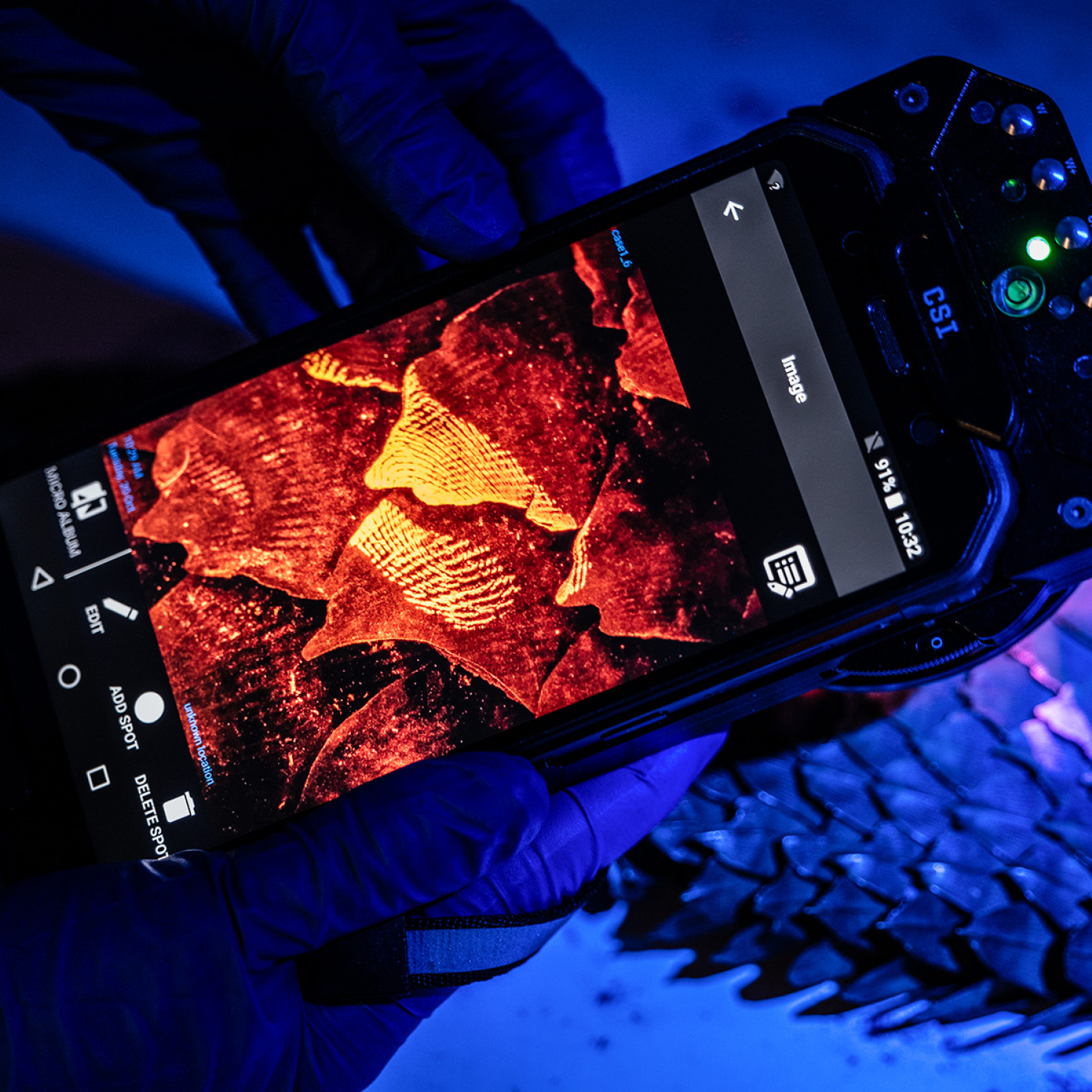
London, England. Wildlife crime and conservation training specialist Dr. Alexandra Thomas uses ForenScope technology to visualise human fingerprints on the scales of a seized pangolin, the world’s most trafficked mammal.
Illegal wildlife trade is more than an environmental issue threatening endangered species. It is also a serious form of organised crime operated by international criminal networks. Scientific forensic evidence is playing an increasingly critical role in identifying poachers, intermediaries and the wider networks involved in illegal wildlife trafficking.
An article published by Wild Eye Magazine, titled “The New Frontier in Wildlife Forensics” examines how modern forensic examination methods are being used to combat wildlife crime. In one of the article’s most notable applications, human fingerprints on seized pangolin scales are visualised using ForenScope crime scene investigation technology.
Wildlife Products Are Sources of Forensic Evidence
Ivory, rhinoceros horn, pangolin scales, turtle shells, bones, fur and feathers are not merely materials involved in illegal trade. When examined using appropriate methods, they may carry valuable evidence, including fingerprints, DNA, ballistic fragments and biochemical residues.
However, the porous, curved and irregular surfaces of these materials can make latent fingerprint detection particularly challenging. Hot and humid environmental conditions may also cause fingerprints and other traces to deteriorate rapidly.
For this reason, combining advanced imaging systems with specialised evidence development methods is particularly important in wildlife crime investigations.
Forensic Technologies Deliver Tangible Results
According to research reported by Wild Eye Magazine, specially developed magnetic fingerprint powders can help recover fingerprints from challenging surfaces such as ivory even 28 days after contact.
More than 200 kits based on this technology have reportedly been supplied to border security teams across 40 countries in Africa and Asia.
In an investigation conducted in Kenya, forensic evidence reportedly contributed to the arrest of 15 individuals, including five police officers, and the seizure of 11 elephant tusks.
This example demonstrates that trafficked wildlife material is not only an indicator that a crime has occurred. It can also serve as a source of evidence capable of connecting the material to the individuals involved in the offence.
Portable Multispectral Examination with ForenScope
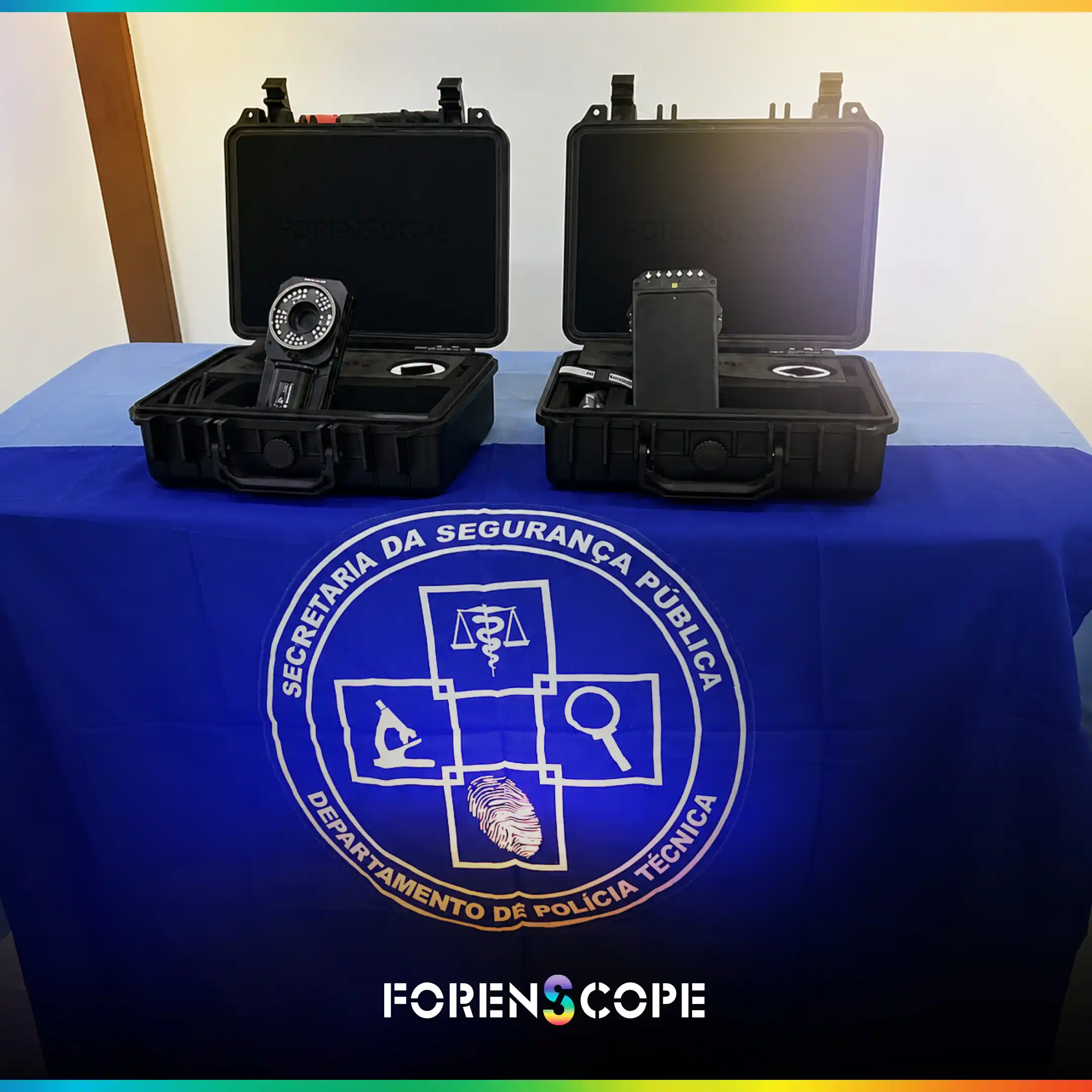
ForenScope’s portable multispectral imaging systems support examinations across ultraviolet, visible and infrared spectral ranges, helping reveal details that may remain undetectable under standard illumination.
High-resolution camera sensors, light sources operating at different wavelengths and specialised optical filters allow latent fingerprints, biological residues and other forms of trace evidence to be examined directly in the field or in a laboratory environment.
The portable and non-contact design of ForenScope systems helps protect sensitive evidence while enabling forensic specialists to conduct faster and more comprehensive examinations of challenging surfaces.
The pangolin examination featured in Wild Eye Magazine provides a compelling example of how ForenScope technologies can also be used on unusual materials seized during wildlife trafficking investigations.
A New Forensic Approach to Wildlife Crime
Effectively combating wildlife crime depends not only on more advanced technologies but also on the proper management of crime scenes, the preservation of evidence and the specialised training of law enforcement personnel.
At ForenScope, we develop portable forensic imaging technologies to make invisible traces visible, strengthen investigations and provide more effective field solutions for professionals working to combat illegal wildlife trade.