
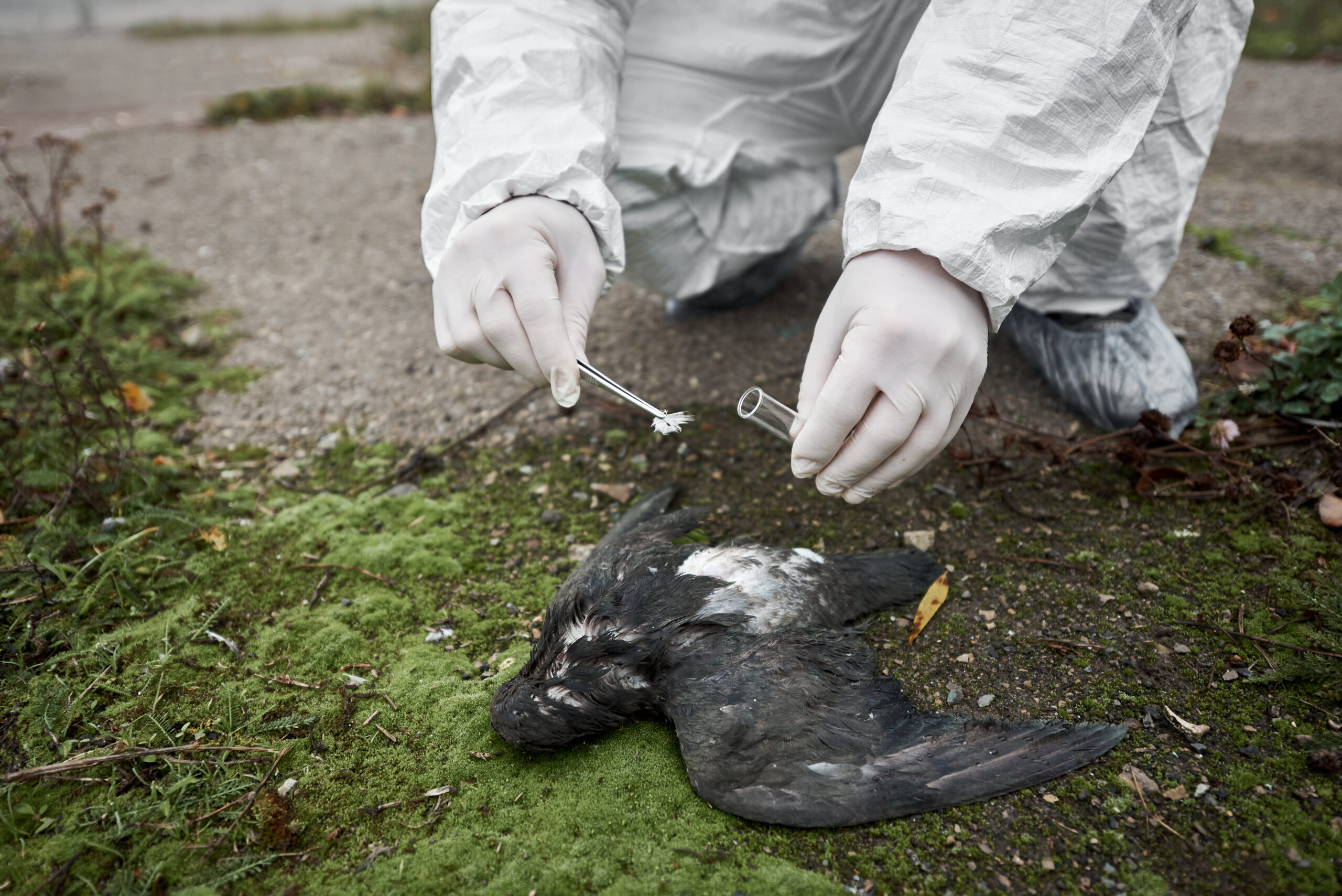
Wildlife forensics is the application of scientific methodologies to legal cases involving flora and fauna. This discipline utilizes rigorous scientific protocols to investigate wildlife-related offenses, including the illicit exotic pet trade, poaching, illegal hunting, and environmental crimes such as oil spills.
The illegal trade of wildlife and their derivatives as well as the unauthorized possession of protected flora and fauna—is a critical global issue. To combat this, seized materials are processed by specialized forensic laboratories or wildlife research institutions. Forensic analysts rely on distinct physical, chemical, and genetic characteristics to identify protected species using the following methodologies:
Morphological Analysis
Morphological examination is the most accessible and cost-effective preliminary forensic method. It relies on evaluating external anatomical features, such as pelage (coat) color, patterns, and skeletal structures. When intact skin or skeletal remains are recovered, physical and microscopic comparisons against established reference databases are crucial for species identification. However, the primary limitation of this method is its dependence on the recovery of well-preserved, intact anatomical specimens.

Footprint (Track) Analysis
Wildlife tracks serve as critical trace evidence in field investigations. The identification of a species, as well as age estimations, depends heavily on the morphology and dimensions of the impression. The primary operational challenges in track analysis include the inability to detect impressions on hard substrates and the frequent contamination of track sites by other species.
Microscopic Examination
Microscopic analysis primarily focuses on hair morphology, cuticle measurement models, and elemental composition. Scanning Electron Microscopy (SEM) is a highly effective tool for identifying species based on structural hair evidence. Furthermore, integrating SEM with Energy Dispersive X-Ray Spectroscopy (EDS) allows for precise elemental analysis (e.g., measuring sodium, potassium, calcium, and sulfur levels). This data can provide critical indicators regarding the animal’s geographic origin. Like morphological analysis, this technique requires relatively well-preserved samples.
Serological Techniques
Serology is based on the interaction between specific antigens and antibodies. By utilizing species-specific antibodies, forensic scientists can identify the biological origin of fluid or tissue evidence. The main limitation of serological analysis is the restricted commercial availability of specialized, species-specific wildlife antibodies across all laboratories.
Molecular Biology (DNA) Techniques
Molecular techniques offer the highest degree of reliability, superseding traditional morphological or serological methods. Early genetic profiling utilized techniques such as Random Amplified Polymorphic DNA (RAPD), Amplified Fragment Length Polymorphism (AFLP), and Restriction Fragment Length Polymorphism (RFLP). While human DNA profiling is highly standardized globally for criminal justice and disaster victim identification, wildlife forensics requires specialized DNA markers.
Advanced profiling is increasingly used to identify species, establish phylogenic relationships, and enforce conservation laws. For example, institutions like the Natural Resources DNA Profiling and Forensic Centre (NRDPFC) in Canada have been established specifically to protect genetic biodiversity through forensic profiling.
Mitochondrial DNA (mtDNA) and Geographic Origin
When morphological features are destroyed, DNA analysis becomes the definitive identification tool. In wildlife forensics, specific mtDNA markers such as 16S rRNA, 12S rRNA, Cytochrome b, and Cytochrome c oxidase (COI) are extensively used. These markers exhibit significant inter-species variation, making them ideal for both species identification and tracking geographic origin. Moving forward, the continued expansion of comprehensive DNA databases for global flora and fauna remains a critical necessity.
Infrared Spectroscopy
Recent advancements utilize Mid-Infrared (MIR) and Near-Infrared (NIR) spectroscopy to differentiate species and verify the geographical origins of organic derivatives. This technique has proven highly effective in the forensic analysis of illegal herbal medicines and trafficked botanical products.
Radioisotope Tracer Techniques
Isotope analysis is utilized to detect trace elements within evidentiary remains. By cross-referencing these isotopic signatures with established geographic baseline maps, investigators can determine the most probable origin of a specimen, further aiding law enforcement in tracking illicit wildlife supply chains.